Wiedereinstieg „Endliche Automaten und Formale Sprachen“
Bitte bis kommenden Montag an mich zurück:
JFLAP für die Bearbeitung der Aufgaben:
Lösungen:
Ueb_Inf4St_KW12_Do19Maerz_Loesun
Bitte bis kommenden Montag an mich zurück:
Ueb_Inf4St_KW12_Do19Maerz_Loesun
0. Schaut euch diese Aufgaben an, sie ähneln denjenigen auf SoloLearn:
https://www.w3schools.com/java/java_exercises.asp
DrawIO, haben wir auch für die ER-Diagramme verwendet, kann Class-Diagramme:
https://app.diagrams.net/
oder per Modelio, wie im Unterricht:
https://www.modelio.org/downloads/download-modelio.html
Zum Ausprobieren, ob die IDE funktioniert, wie sie soll, hier ein kleines Klassensystem
aus drei Klassen, erstellt in Repl.it:
class Main {
  private subclass[] subclassarray =  new subclass[10];
  public static void main(String[] args) {
    System.out.println("Ein Array von Subklassen");
    subclassholder SuClHo = new subclassholder(10);
  }
}
public class subclass{
  private int parameter;
  public subclass(int x){
    System.out.println("Parameter: " + x);
    this.parameter = x;
  }
  public int getParameter(){
    return this.parameter;
  }
  public void setParameter(int y){
    this.parameter = y;
  }
}
public class subclassholder{
  private subclass[] subclassarray;
  public subclassholder(int anzahl){
    subclassarray = new subclass[anzahl];
    for(int i=0; i<anzahl; i++){
      subclassarray[i] = new subclass(i*10);
    }
  }
}
Zusatzaufgabe: Was macht dieser Code und wieso? 😉
L(PDA) = {anbn | n>0}
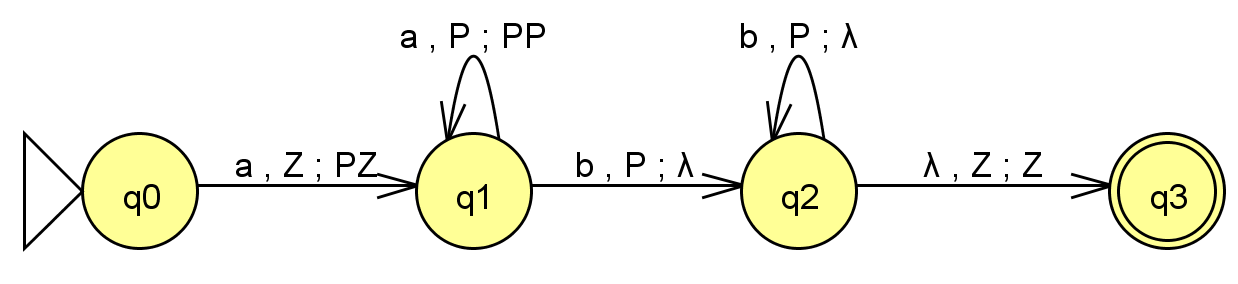
class Stack:
    def __init__(self):
        self.stackliste = []
        self.stacklistenlaenge = 0

    def pop(self):
        if self.istLeer() == False:
            self.stacklistenlaenge = self.stacklistenlaenge - 1
            return self.stackliste.pop()

    def peek(self):
        if self.istLeer() == False:
            return self.stackliste[self.stacklistenlaenge - 1]

    def push(self, inhalt):
        self.stackliste.append(inhalt)
        self.stacklistenlaenge = self.stacklistenlaenge + 1

    def getStacklistenlaenge(self):
        return self.stacklistenlaenge

    def istLeer(self):
        if self.stacklistenlaenge <= 0:
            return True
        else:
            return False
#---------------------------------------------------
def Zustandsuebergangsfunktion(symbol):
    global state
    if state == "q0":
        if symbol == "a":
            state = "q1"
            pdaStack.pop()
            pdaStack.push("Z")
            pdaStack.push("P")
            return True
        else:
            return False
    if state == "q1":
        if symbol == "a":
            pdaStack.pop()
            pdaStack.push("P")
            pdaStack.push("P")
            state = "q1"
            return True
        elif symbol == "b":
            pdaStack.pop()
            state = "q2"
            return True
        else:
            return False
    if state == "q2":
        if symbol == "b":
            if pdaStack.peek() == "P":
                state = "q2"
                pdaStack.pop()
                if pdaStack.peek() == "Z":
                    state = "q3"
                return True
        else:
            return False
    if state == "q3":
        if pdaStack.peek() == "Z":
            pdaStack.pop()
            return True
        else:
            return False
#---------------------------------------------------
def Akzeptor(wort):
    global state
    for i in range(len(wort)):
        testsymbol = wort[i]
        aktzustand = Zustandsuebergangsfunktion(testsymbol)
        print("Zustand:     ", state, "\tAktueller Stack:  ", pdaStack.stackliste)
        if aktzustand == False:
            return False
    if pdaStack.peek() == "Z" and state == "q3":
        return True
    else:
        return False
#---------------------------------------------------

pdaStack = Stack()
pdaStack.push("Z")
state = "q0"
print("Startzustand:", state, "\tLeerzustand Stack:", pdaStack.stackliste)

ergebnis = Akzeptor("aaaaabbbbb")
print("---------\nAkzeptiert?",    ergebnis)
L(DEA) ={(ha)n! | n>0)

state = "q0"
def Zustandsuebergangsfunktion(symbol):
    global state
    if state == "q0":
        if symbol=="h":
            state = "q1"
            return True
        else:
            return False
    if state == "q1":
        if symbol=="a":
            state = "q2"
            return True
        else:
            return False
    if state == "q2":
        if symbol=="!":
            state = "q3"
            return True
        elif symbol =="h":
            state = "q1"
            return True
        else:
            return False
    if state == "q3":
        return False

def Akzeptor(wort):
    global state
    for i in range(len(wort)):
        testsymbol = wort[i]
        aktzustand = Zustandsuebergangsfunktion(testsymbol)
        if aktzustand == False:
            print("war nix")
            return False
    if state == "q3":
        print("stimmt!")
        return True

ergebnis = Akzeptor("hahahaha!")
print(ergebnis)
Ampelschaltung als Moore-Automat
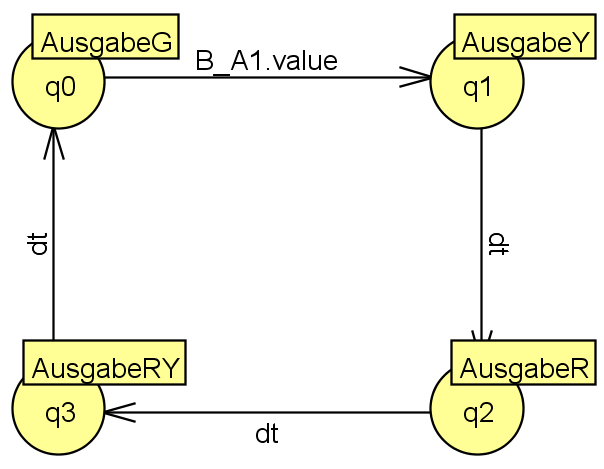
import board
import time
import neopixel
import touchio

NeopixelReihe = neopixel.NeoPixel(board.NEOPIXEL, 10)
NeopixelReihe.auto_write = False
B_A1 = touchio.TouchIn(board.A1)
zustand = "q0"
startzeit = time.monotonic()
dt = time.monotonic()

AusgabeR = [(16, 0, 0), (0, 0, 0), (0, 0, 0)]
AusgabeY = [(0, 0, 0), (16, 16, 0), (0, 0, 0)]
AusgabeG = [(0, 0, 0), (0, 0, 0), (0, 16, 0)]
AusgabeRY = [(16, 0, 0), (16, 16, 0), (0, 0, 0)]


def resetTimer():
    global startzeit
    startzeit = time.monotonic()


def macheAusgabe(zustand):
    if zustand == "q0":
        NeopixelReihe[2] = AusgabeG[0]
        NeopixelReihe[1] = AusgabeG[1]
        NeopixelReihe[0] = AusgabeG[2]

    if zustand == "q1":
        NeopixelReihe[2] = AusgabeY[0]
        NeopixelReihe[1] = AusgabeY[1]
        NeopixelReihe[0] = AusgabeY[2]

    if zustand == "q2":
        NeopixelReihe[2] = AusgabeR[0]
        NeopixelReihe[1] = AusgabeR[1]
        NeopixelReihe[0] = AusgabeR[2]

    if zustand == "q3":
        NeopixelReihe[2] = AusgabeRY[0]
        NeopixelReihe[1] = AusgabeRY[1]
        NeopixelReihe[0] = AusgabeRY[2]
        NeopixelReihe.show()


def zustandsuebergangsfunktion():
    global zustand
    global dt
    global startzeit
    if zustand == "q0":
        macheAusgabe(zustand)
        if B_A1.value:
            zustand = "q1"
            resetTimer()
            return

    elif zustand == "q1":
        macheAusgabe(zustand)
        if dt > 1.0:
            resetTimer()
            zustand = "q2"
            return

    elif zustand == "q2":
        macheAusgabe(zustand)
        if dt > 1.0:
            resetTimer()
            zustand = "q3"
            return

    elif zustand == "q3":
        macheAusgabe(zustand)
        if dt > 1.0:
            resetTimer()
            zustand = "q0"
            return

while True:
    zustandsuebergangsfunktion()
    dt = time.monotonic() - startzeit
    time.sleep(0.1)

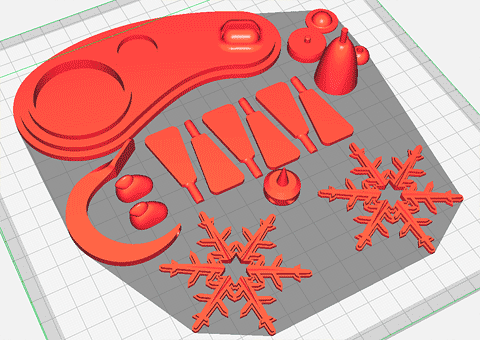 3D-Files:
complete.stl
Estimated printing time with an Ultimaker 2, „fine“ profile (0.1mm): 7 hours 5 minutes
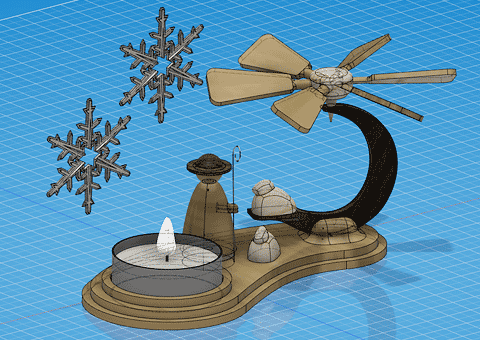 Fusion 360:
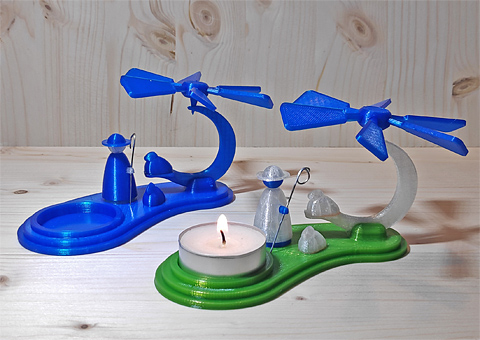 Result:
3D-printed!